SKU:S435
Bismuth Crystal – Iridescent Rainbow Citadel
Bismuth Crystal – Iridescent Rainbow Citadel
Make your first payment today, then monthly over 2–6 months.
1 in stock
Couldn't load pickup availability
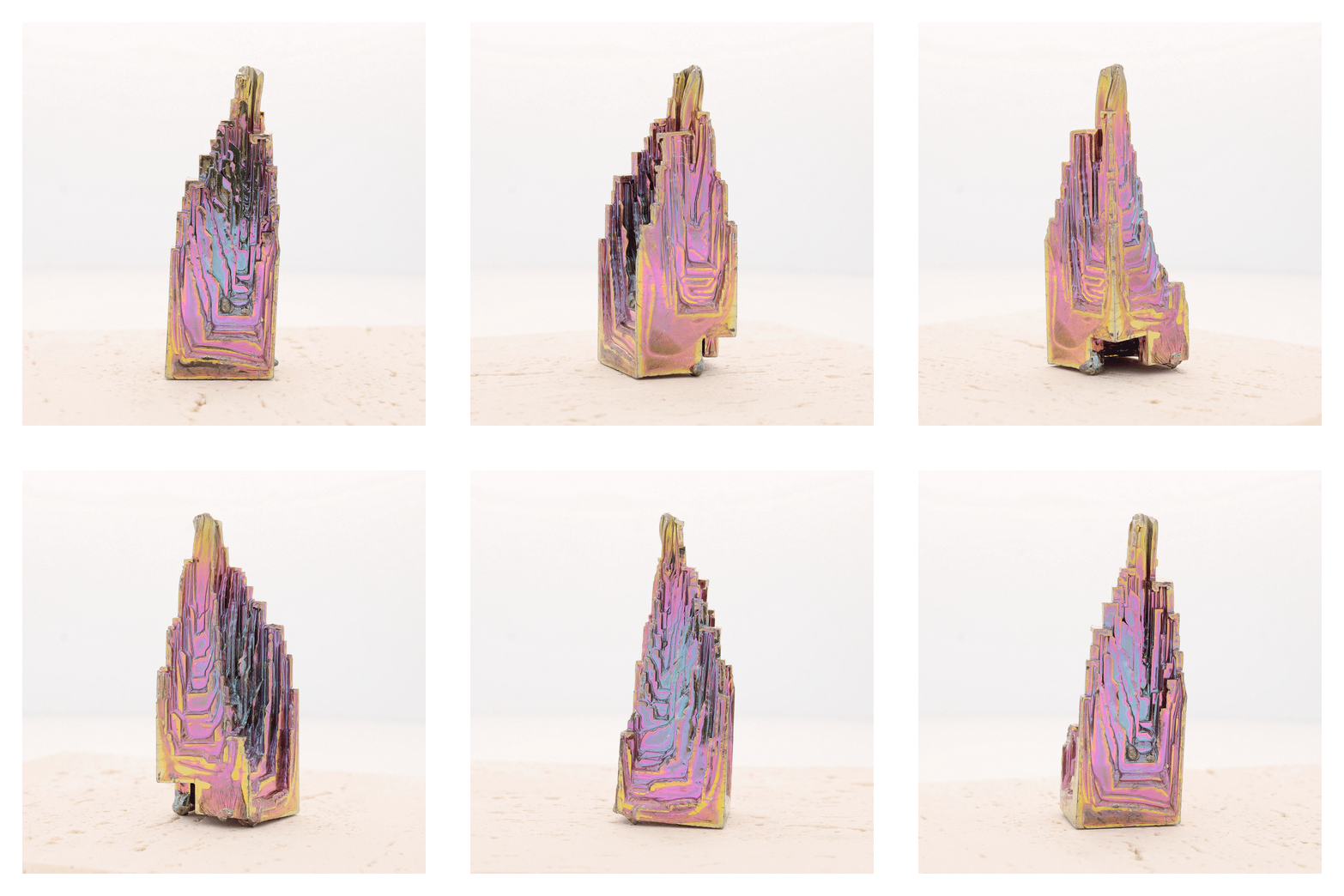
A spectacular Bismuth crystal specimen with an impressive tall, architectural form and an intricate arrangement of stepped terraces, vertical walls and deep hopper formations. At 48mm high, this is one of the more substantial Bismuth specimens in the collection, with a commanding tower-like profile and exceptional visual depth.
The specimen displays a fascinating palette of rose pink, lavender, golden yellow, violet and deep green metallic tones. Its stepped surfaces create a series of terraces that rise dramatically upwards, while the large recessed hopper formation visible on one face gives the crystal a striking sense of depth. From different angles, the specimen reveals completely different combinations of colour, geometry and crystal growth.
Specimen Details
✓ Mineral: Bismuth
✓ Crystal Form: Hopper crystal
✓ Colour: Iridescent pink, purple, gold, blue and deep green
✓ Dimensions: 17mm x 17mm x 48mm high
✓ Weight: 40 grams
✓ Formation: Artificially grown from refined bismuth
✓ Surface: Iridescent bismuth oxide layer
✓ Specimen Type: Cultivated crystal
About Bismuth
Bismuth is a naturally occurring chemical element with the symbol Bi and atomic number 83. It is a heavy, silvery-white metal that is relatively rare in the Earth's crust. Natural bismuth can occur as a mineral, but the spectacular hopper crystals prized by collectors are generally grown from molten refined bismuth under controlled conditions.
What makes these specimens so fascinating is the combination of chemistry, crystallisation and surface oxidation that produces their extraordinary colours and intricate geometric forms.
Why Are Bismuth Crystals So Colourful?
The spectacular colours of Bismuth crystals are not created with paint or dye. As the freshly formed crystal cools and comes into contact with oxygen, an extremely thin layer of bismuth oxide develops across its surface.
When light interacts with this microscopic layer, it produces interference colours, creating brilliant shades of green, blue, purple, pink, yellow and gold. The colours can vary considerably depending on the thickness of the oxide layer, which is one reason every Bismuth crystal has its own distinctive appearance.
This specimen is particularly striking for its combination of soft rose pink and violet tones with rich golden areas and contrasting deep green and blue sections. The colour variation becomes especially dramatic around its recessed hopper structures.
How Does the Hopper Shape Form?
Bismuth is famous for producing hopper crystals, a type of crystal growth in which the edges develop faster than the central areas. This creates recessed sections and the characteristic stepped, staircase-like appearance.
This specimen demonstrates the hopper growth pattern on an impressive scale. Its broad lower sections gradually develop into increasingly tall terraces, creating a dramatic tower or citadel-like structure. The large recessed areas reveal successive layers of crystal growth and create strong contrasts between the brightly coloured outer surfaces and darker interior sections.
The result is an unusually architectural Bismuth specimen, with tall vertical formations, deep chambers and numerous stepped surfaces to explore.
Cool Facts About Bismuth
🔥 It expands as it solidifies: Bismuth is unusual because it expands slightly as it changes from liquid to solid. Only a relatively small number of elements behave this way.
🌈 The rainbow is real: The spectacular colours come from a microscopic oxide layer and light interference rather than artificial colouring.
⚛️ Bismuth is an element: With the chemical symbol Bi and atomic number 83, Bismuth has its own place on the periodic table.
🧲 It is strongly diamagnetic: Bismuth is one of the most diamagnetic elements, meaning it is repelled by a magnetic field.
💊 It has medical uses: Bismuth compounds have been used in various medicines, including products used for digestive complaints.
🏗️ Its crystals look architectural: The hopper growth pattern creates terraces, steps and recessed areas that can resemble miniature buildings, staircases or futuristic structures.
🌡️ It has a relatively low melting point: Bismuth melts at approximately 271°C, making it possible to grow these remarkable crystals by melting and carefully cooling the metal.
✨ Every crystal is different: Small changes during the cooling and oxidation process influence the shape and colours, giving each cultivated specimen its own character.
A Fascinating Addition to a Collection
This 40-gram Bismuth crystal is a particularly impressive specimen for collectors who appreciate unusual elements, dramatic crystal architecture and spectacular metallic colour. Its 48mm height gives it a strong presence, while its intricate stepped structure and deep hopper formations provide plenty of detail to appreciate from different angles.
The combination of its tall citadel-like profile, vivid iridescence and contrasting dark interior sections makes this a standout display piece. Whether you're building a collection of elements and minerals, fascinated by crystal formation, or simply looking for something unusual and colourful, this Bismuth specimen offers a captivating combination of science, geometry and metallic beauty.