SKU:S921
Botryoidal Malachite Specimen from the Katanga Copperbelt, DRC
Botryoidal Malachite Specimen from the Katanga Copperbelt, DRC
1 in stock
Couldn't load pickup availability
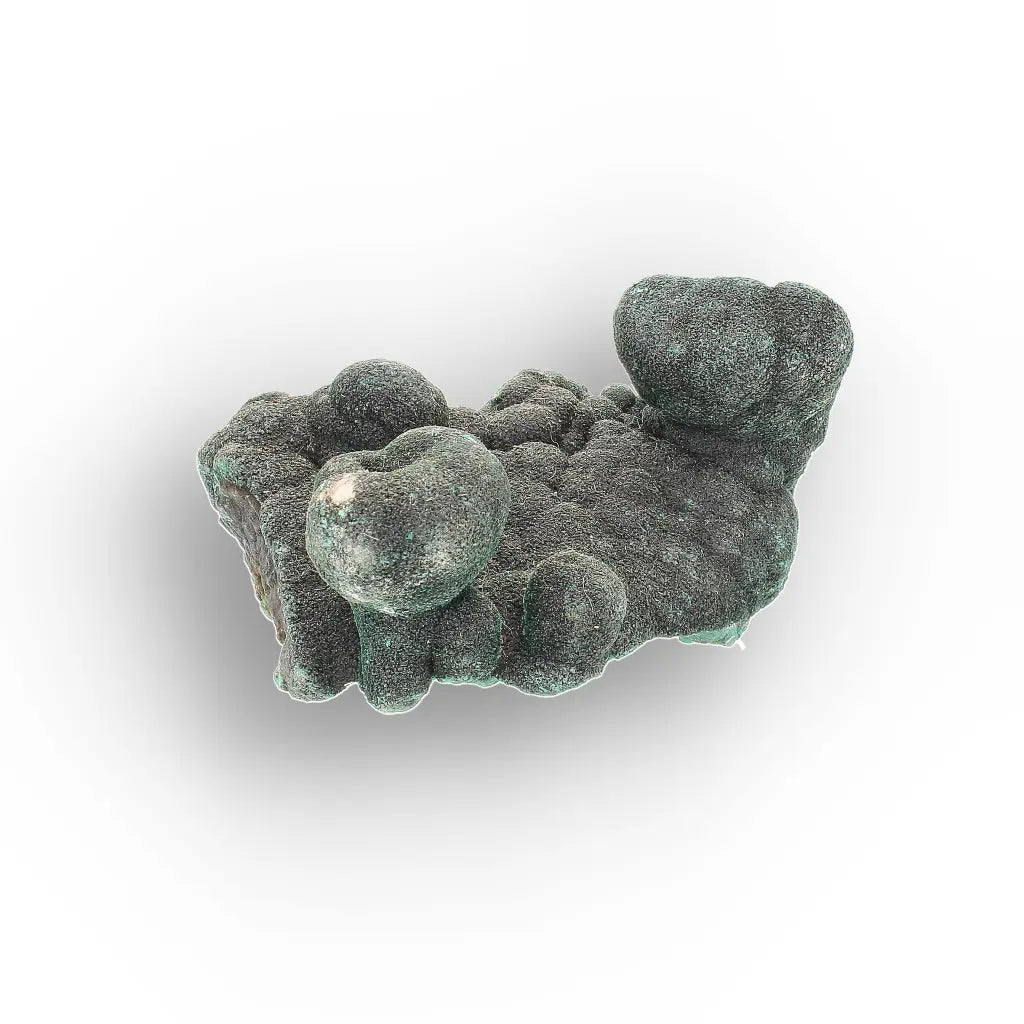
This beautiful Botryoidal Malachite from the renowned Kolwezi Region of the Katanga Copperbelt, Democratic Republic of the Congo, is a wonderfully sculptural collector specimen. Large rounded botryoidal formations rise above a richly textured base, creating an attractive natural landscape that immediately draws the eye.
The specimen displays a deep forest-green surface with a soft velvety lustre produced by countless microscopic Malachite crystals. Turning the piece over reveals a striking contrast, where vivid emerald-green banding and concentric growth rings expose the internal structure that developed as mineral-rich groundwater deposited successive layers of copper carbonate over millions of years.
Several rounded nodules display classic concentric "bullseye" patterns, while the underside features intricate crystalline cavities that add further interest. This combination of smooth botryoidal domes, velvety texture and exposed internal growth makes the specimen appealing from every angle.
Perfectly sized for a display cabinet, this is an excellent example of the exceptional Malachite specimens for which the Katanga Copperbelt is world famous.
Specimen Details
✓ Mineral: Malachite
✓ Associated Minerals: None
✓ Locality: Kolwezi Region, Katanga Copperbelt, Democratic Republic of the Congo (DRC)
✓ Crystal System: Monoclinic
✓ Colour: Dark Green to Bright Emerald Green
✓ Lustre: Velvety to Silky
✓ Transparency: Opaque
✓ Crystal Habit: Botryoidal and Massive
✓ Specimen Size: Approximately 63 × 46 × 43 mm
✓ Weight: 146 g
Malachite forms in the oxidised zones of copper deposits where copper-rich fluids react with carbonate-bearing rocks. The famous mines of the Katanga Copperbelt consistently produce some of the world's finest botryoidal Malachite, prized for its rich colour, concentric banding and distinctive sculptural forms.
Whether displayed as a decorative natural artwork or added to a serious mineral collection, this specimen is an excellent example of the beauty created by nature.
Make your first payment today, then monthly over 2–6 months.
Before You Add to Cart ✨
Before You Add to Cart ✨
Online Only: This exact piece is available online only. Similar pieces may be available in store so please check with us before you visit Forever Gems in Franschhoek. Want to view it in-store? Just ask — we’ll arrange it.
Photos: We shoot for accuracy, but colors may vary slightly by screen or lighting.
Size & Weight: Full details are in the description. Please check before buying.
What You See Is What You Get: The item pictured is the exact piece you’ll receive.
Our Mineral Authenticity Guarantee 🛡️
Our Mineral Authenticity Guarantee 🛡️
At Forever Gems, we guarantee that every mineral specimen we offer has been carefully identified and classified to the best of current mineralogical knowledge. We verify locality information wherever possible, provide accurate provenance details, and source our specimens responsibly through trusted suppliers and ethical channels. When you purchase from Forever Gems, you can buy with confidence knowing that authenticity, accurate identification, and responsible sourcing are at the heart of everything we do.
Authentic. Accurately Identified. Responsibly Sourced. ✨
Shipping & Collection 🚚
Shipping & Collection 🚚
We ship nationwide with The Courier Guy and RAM Hand-to-Hand Couriers primarily and worldwide with FedEx. Tracking provided on all orders.
Local pickup: Wellington by appointment, Franschhoek Store Fri–Sun, or Franschhoek Village Market Saturdays (weather permitting).
Own courier: We’ll notify you when ready for collection from Wellington, SA.
International: Shipping options show at checkout. Duties/taxes, if any, are paid by the buyer.
All specimens are securely packaged to arrive safely. Questions? Contact us