SKU:S536
Iridescent Bismuth Crystal Cityscape Cluster
Iridescent Bismuth Crystal Cityscape Cluster
Pay interest-free over 2-4 months with Stitch Pay Later
1 in stock
Couldn't load pickup availability
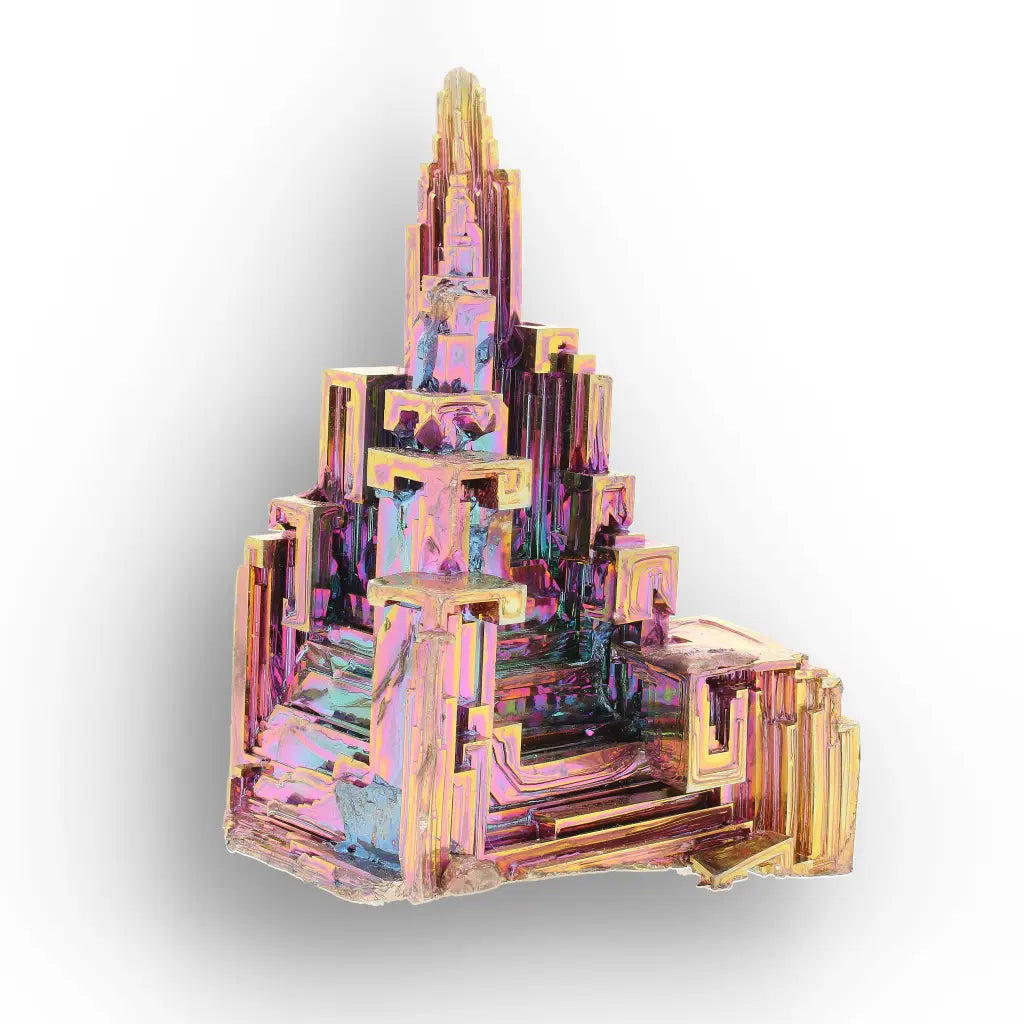
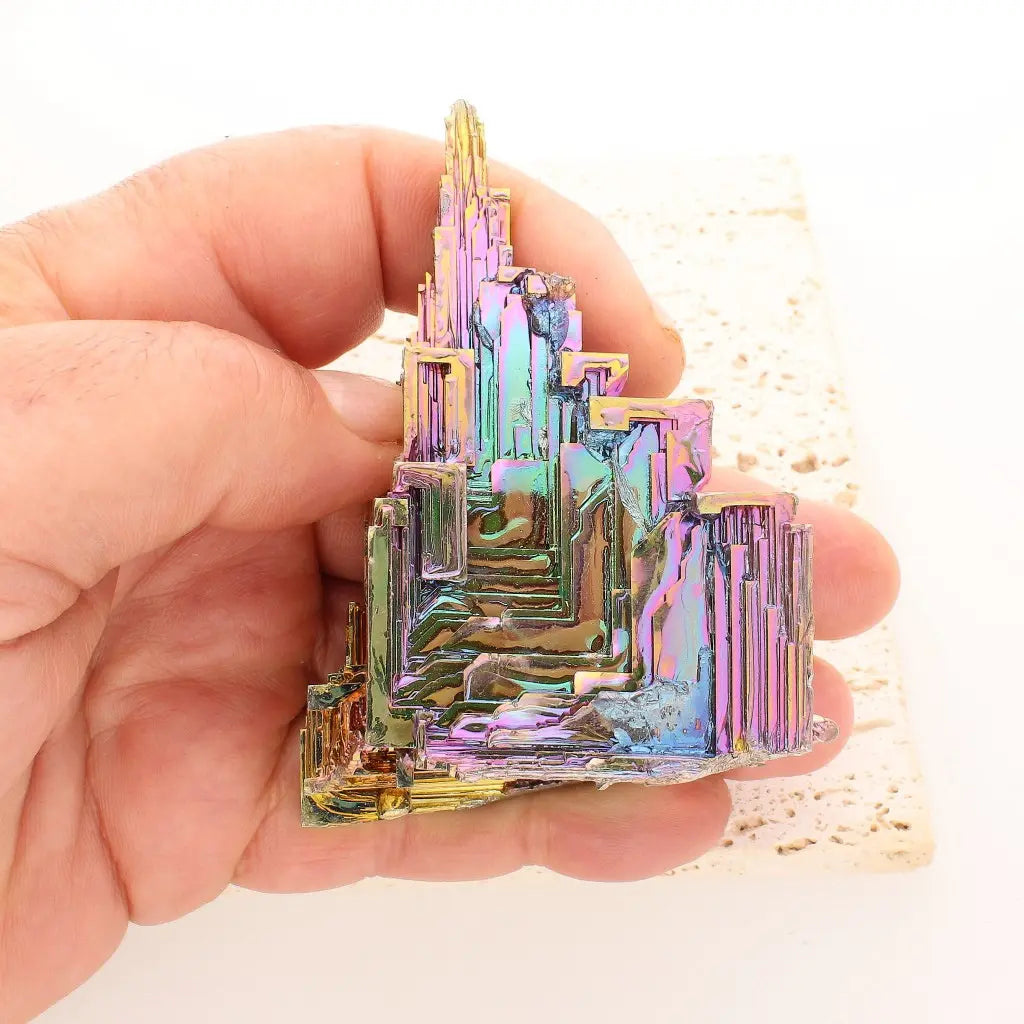
Discover the extraordinary architectural beauty of this Bismuth crystal specimen, featuring a dramatic cluster of towering hopper crystals arranged in a striking three-dimensional formation. The crystals rise from a broad stepped base, creating an unusual structure that resembles a miniature futuristic cityscape.
The specimen displays a spectacular palette of iridescent pink, purple, gold, turquoise, blue and green. As the light moves across the crystal surfaces, the colours shift dramatically, revealing different shades and reflections across the stepped edges and recessed sections.
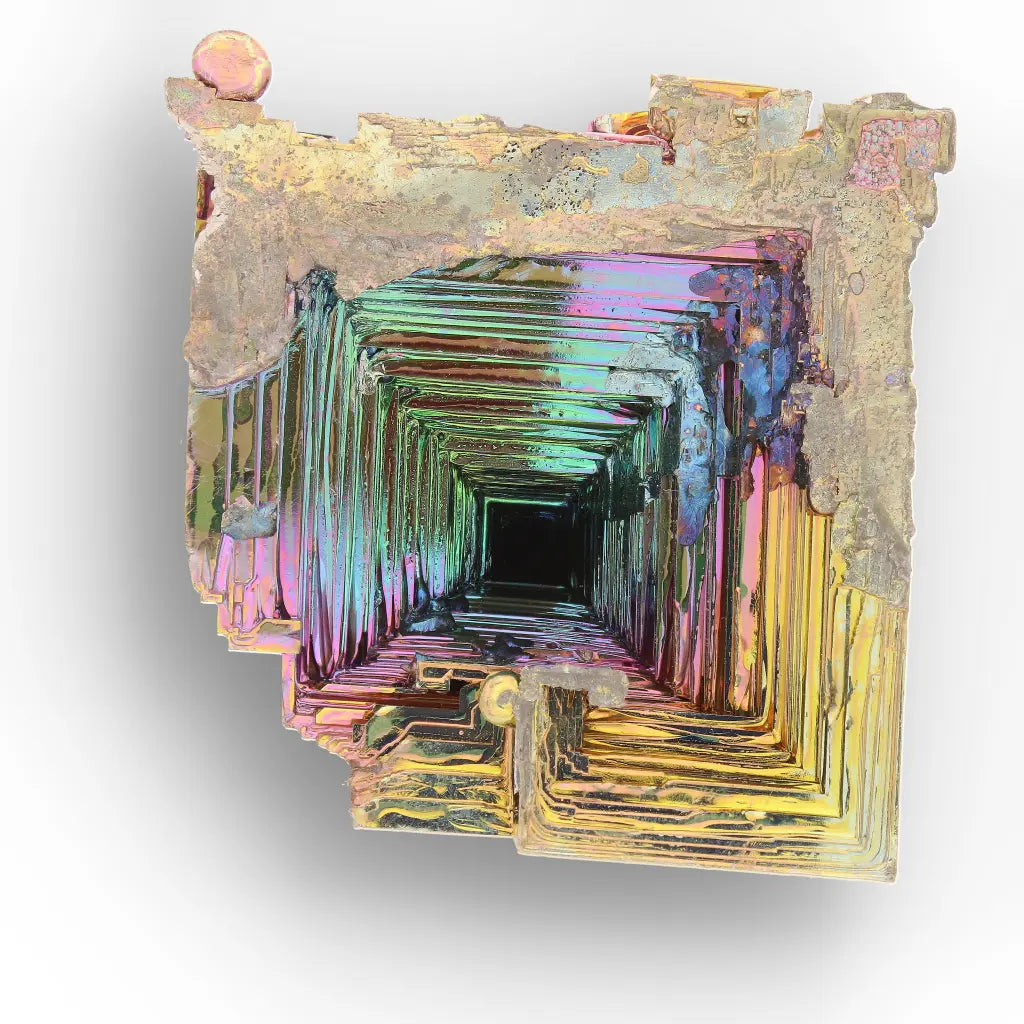
The tall central crystal formations give this specimen an impressive sense of height and depth. Surrounding hopper crystals create terraces, open chambers and geometric corridors, making the specimen particularly fascinating to examine from different angles.
Specimen Details
✓ Mineral: Bismuth
✓ Crystal Form: Hopper crystal cluster
✓ Colour: Iridescent pink, purple, blue, turquoise, green and gold
✓ Dimensions: 57mm x 57mm x 83mm
✓ Weight: 333 grams
✓ Formation: Cultivated from refined bismuth
✓ Surface: Iridescent bismuth oxide layer
✓ Specimen Type: Large cultivated crystal cluster
About Bismuth
Bismuth is a naturally occurring chemical element with the symbol Bi and atomic number 83. It is a heavy, silvery-white metal that is particularly popular with collectors because of the remarkable crystal structures it can produce when molten bismuth is carefully cooled.
The spectacular hopper crystals found on specimens like this are generally cultivated under controlled conditions rather than formed naturally in the Earth's crust. During cooling, the bismuth develops its characteristic stepped and skeletal crystal structures.
Why Are Bismuth Crystals So Colourful?
The spectacular rainbow colours of Bismuth are produced by a thin bismuth oxide layer that forms naturally on the surface of the crystal.
When light interacts with this microscopic layer, interference produces brilliant colours ranging from pink and purple to blue, green, turquoise and gold. Differences in the thickness of the oxide layer across the crystal create the remarkable variation in colour.
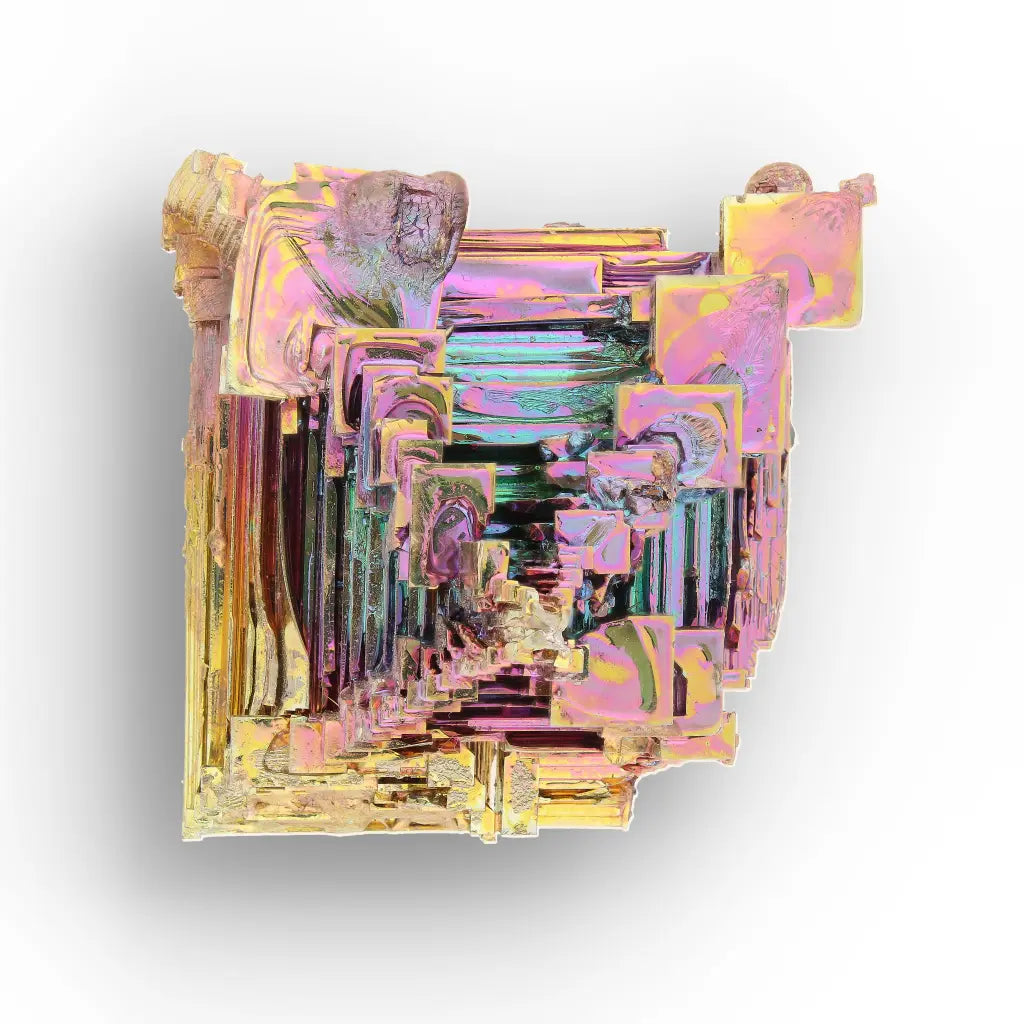
This specimen has particularly attractive colour variation, with vibrant pink and golden surfaces contrasting with deeper purple, blue and turquoise areas.
How Does the Hopper Shape Form?
Bismuth is famous for its distinctive hopper crystal growth. During crystallisation, the outer edges of a growing crystal can advance faster than the central portions. This produces recessed areas and characteristic staircase-like structures.
As multiple crystals develop together, these individual formations can create complex clusters containing terraces, square openings, vertical walls and recessed chambers.
The result is an extraordinary geometric structure. In specimens such as this one, the arrangement of the crystals can resemble miniature architecture, futuristic buildings or even a crystalline cityscape.
Cool Facts About Bismuth
🔥 It expands as it freezes: Bismuth is unusual because it expands slightly when changing from liquid to solid.
🌈 The colours come from its surface: The rainbow appearance is produced by a thin oxide layer and light interference rather than conventional colouring.
⚛️ It is an element: Bismuth has the chemical symbol Bi and atomic number 83.
🧲 It is strongly diamagnetic: Bismuth is one of the most strongly diamagnetic elements.
💊 It has medical uses: Bismuth compounds have been used in medicines for digestive conditions.
🏗️ It creates extraordinary crystal shapes: Hopper growth produces terraces, steps and recessed structures that can resemble miniature architecture.
🌡️ It has a relatively low melting point: Bismuth melts at approximately 271°C, allowing crystals to be produced by carefully melting and cooling the metal.
✨ Every specimen is different: Variations during crystallisation and oxidation create differences in shape, structure and colour.
A Spectacular Collector's Specimen
This Bismuth crystal is an impressive example of geometric crystal architecture, combining towering hopper formations with vivid iridescent colour. The tall central structures give the specimen a dramatic presence, while the surrounding crystals create layers of terraces, chambers and intricate stepped surfaces.
Its changing colours and complex three-dimensional structure make it especially rewarding to view from different angles. One side may reveal predominantly pink and gold tones, while another exposes deeper purple, turquoise or blue reflections.
For collectors of elements, unusual crystals and scientifically fascinating specimens, this Bismuth crystal offers a remarkable combination of natural chemistry, controlled crystallisation and extraordinary visual beauty. Its futuristic architecture makes it a standout display specimen that is sure to attract attention in any mineral collection.