SKU:S975
Woolly Mammoth Tusk Fossil Fragment – Alaskan Ice Age Specimen
Woolly Mammoth Tusk Fossil Fragment – Alaskan Ice Age Specimen
1 in stock
Couldn't load pickup availability
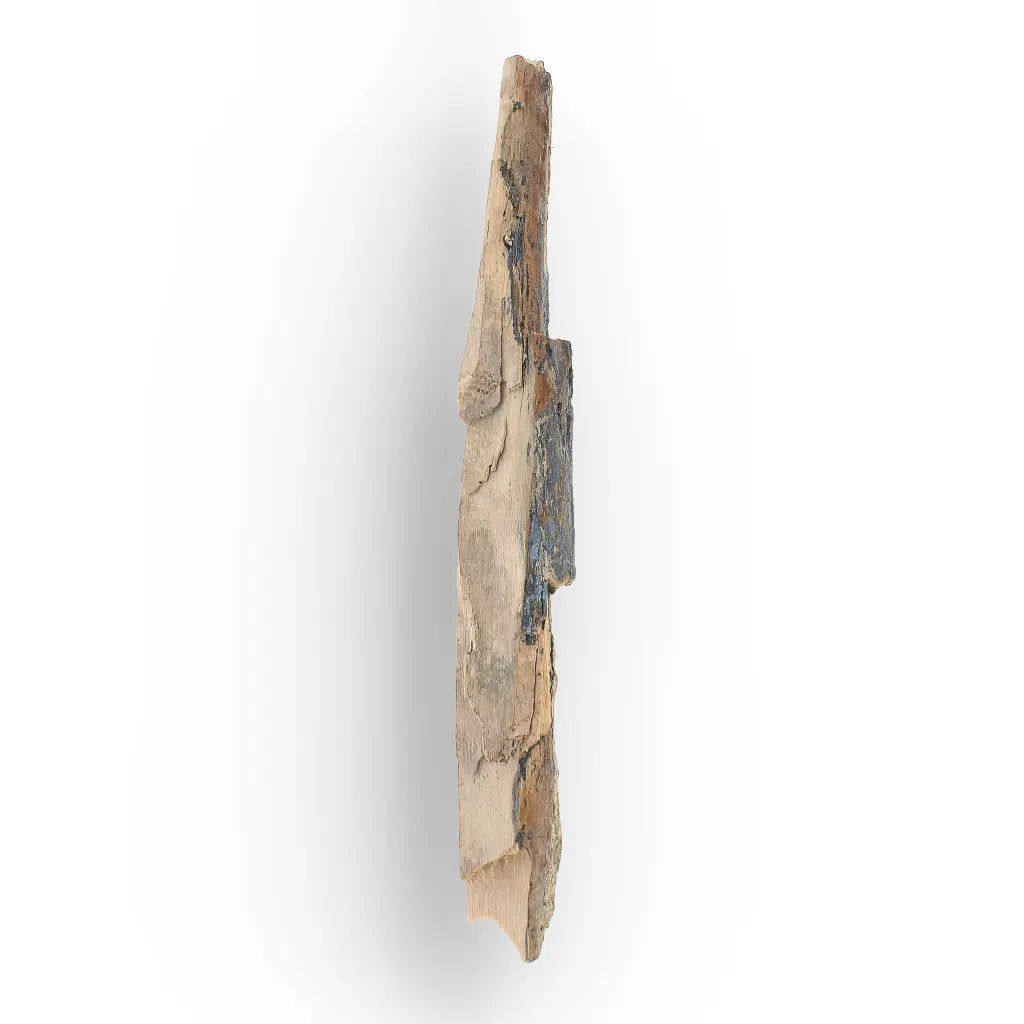
This Woolly Mammoth Tusk Fossil is a distinctive elongated fragment displaying a beautiful combination of earthy brown, weathered tan and pale cream tones. Its slender, naturally tapered form reveals contrasting layers of ancient tusk ivory, with darker mineralised areas and textured surfaces that reflect its long burial in the Alaskan permafrost. This specimen originates from a larger piece of mammoth tusk that was stabilised with resin to preserve its fragile structure, and a small amount of the resin remains visible along the side. The combination of natural fossil textures, contrasting colours and preserved structural details makes this an interesting addition to an Ice Age fossil collection.
Specimen Details
✓ Fossil: Woolly Mammoth tusk, Mammuthus primigenius
✓ Locality: Tanana River Valley, Alaska, USA
✓ Geological Age: Pleistocene Epoch / Ice Age
✓ Material: Fossil mammoth tusk / fossil ivory
✓ Condition: Naturally weathered and fragmented
✓ Size: 26mm x 174mm x 12mm
✓ Weight: 51 grams
The Woolly Mammoth
The Woolly Mammoth (Mammuthus primigenius) was one of the most iconic animals of the Pleistocene Epoch. Closely related to modern elephants, it was specially adapted to life in cold northern environments. Its thick coat, dense underfur and insulating body fat helped it survive the harsh conditions of the Ice Age.
Alaska formed part of Beringia, the vast Ice Age landscape that once connected Alaska and Siberia. Much of this region remained ice-free and supported extensive grasslands where mammoths, horses, bison and other Ice Age animals lived.
As the Ice Age ended, the climate became warmer and wetter, changing the mammoth-steppe environment and reducing the grasslands on which mammoths depended. Human activity may also have contributed to their decline. Most mainland Woolly Mammoths disappeared around 10,000 years ago, although isolated populations survived for thousands of years longer. The last known Woolly Mammoths lived on Wrangel Island until approximately 4,000 years ago.
Why Are Mammoth Tusks Often Broken and Split?
Complete mammoth tusks are much less commonly found than fragments. After a mammoth died, its tusks could remain buried for thousands of years, exposed to pressure, moisture, mineral changes and repeated freezing and thawing. Over time, these processes can create weaknesses and enlarge existing cracks within the fossilized dentine.
River systems can add further wear. As Alaskan rivers erode ancient sediments and permafrost, buried mammoth remains become exposed and can be moved through gravel deposits. Contact with rocks and gravel can cause already-fractured tusks to break into sections.
The broken and weathered appearance of this specimen is therefore part of its story. The contrasting outer surface and exposed interior provide a glimpse of the structure of an ancient mammoth tusk and its long journey from an Ice Age animal to a fossil recovered from the Tanana River Valley.
Make your first payment today, then monthly over 2–6 months.
Before You Add to Cart ✨
Before You Add to Cart ✨
Online Only: This exact piece is available online only. Similar pieces may be available in store so please check with us before you visit Forever Gems in Franschhoek. Want to view it in-store? Just ask — we’ll arrange it.
Photos: We shoot for accuracy, but colors may vary slightly by screen or lighting.
Size & Weight: Full details are in the description. Please check before buying.
What You See Is What You Get: The item pictured is the exact piece you’ll receive.
Authenticity Guaranteed 🛡️
Authenticity Guaranteed 🛡️
Every specimen at Forever Gems is personally hand-selected and verified. We source exclusively from trusted IMCA-registered dealers, artisanal miners, and long-standing partners we meet with annually at the Tucson Gem and Mineral Show.
Any replica or reproduction fossils are always clearly labeled and sold separately.
Lifetime Authenticity Guarantee
We stand behind the authenticity of every fossil we sell. If a fossil purchased from Forever Gems can be scientifically proven not to be authentic, it may be returned at any time for a full refund, provided supporting proof is supplied. This lifetime authenticity guarantee is in addition to our standard 30-day return policy.
Rather than paper certificates, we rely on over 13 years of experience, expert knowledge, and trusted supplier relationships to ensure authenticity and quality.
Shipping & Collection 🚚
Shipping & Collection 🚚
We ship nationwide with The Courier Guy and RAM Hand-to-Hand Couriers primarily and worldwide with FedEx. Tracking provided on all orders.
Local pickup: Wellington by appointment, Franschhoek Store Fri–Sun, or Franschhoek Village Market Saturdays (weather permitting).
Own courier: We’ll notify you when ready for collection from Wellington, SA.
International: Shipping options show at checkout. Duties/taxes, if any, are paid by the buyer.
All specimens are securely packaged to arrive safely. Questions? Contact us
You may also like
Blue Chalcedony Silver Ring – Serene Glow
Blue Apatite Sterling Silver Ring – Ocean Glow
Citrine Sterling Silver Ring – Golden Glow
Copper Turquoise Silver Ring – Earthy Glow
Quick links
- Contact Us
- Where to find us
- Authenticity Guarantee
- Blog Posts
- Shipping Policy
- Return Policy
- Privacy Policy
- Terms of Service
Forever Gems
We’d love to hear from you. Whether you have a question, a comment, a suggestion, or a request, we’re here to help. You can contact us by email, phone, or social media.
Subscribe to our emails
Payment methods